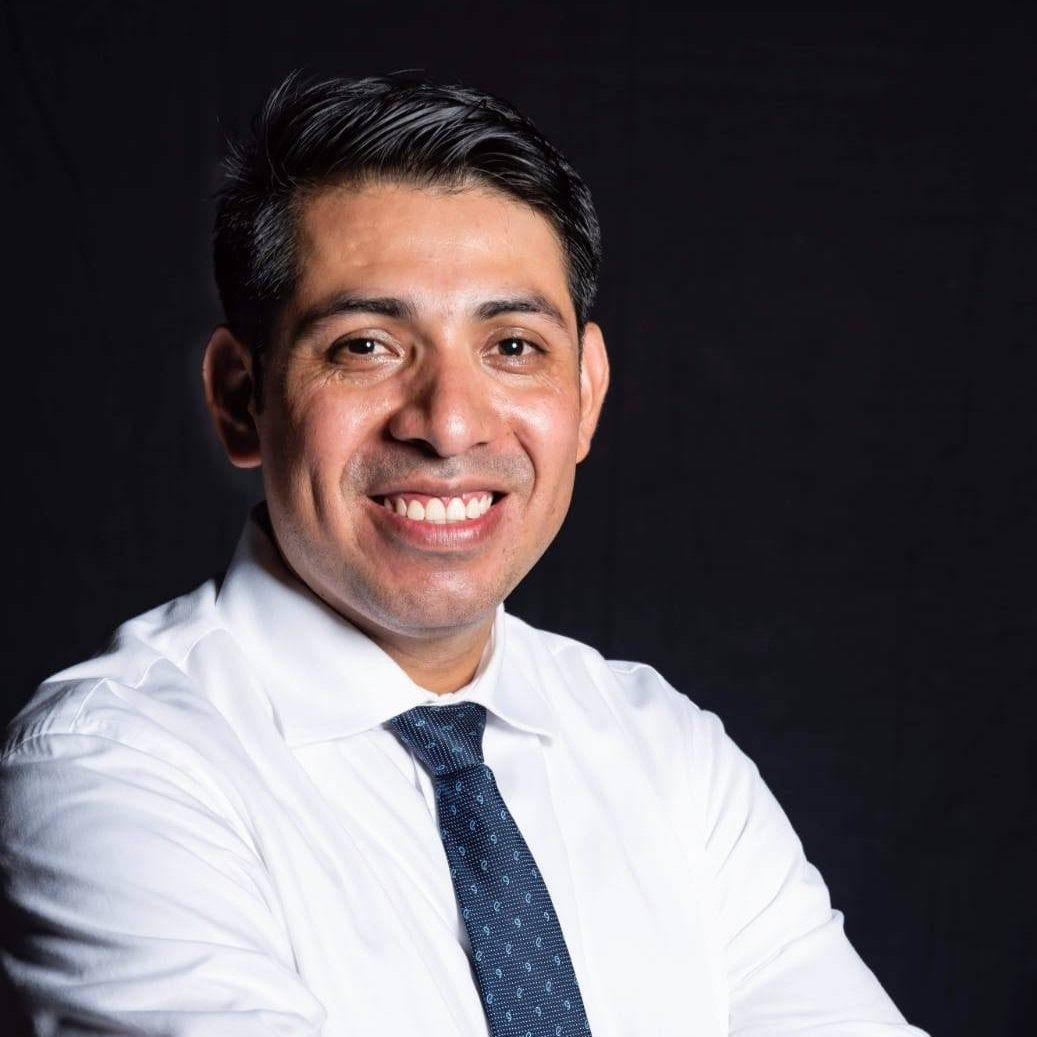
Alumnus Yohan Garcia was recently interviewed for the Ethics & Society MA Alumni Spotlight Series about the journey that brought him there and what Ethics & Society students can learn from his path. He currently works as a Catholic Social Teaching Education Manager at the United States Conference of Catholic Bishops.
What drew you to Catholic social ministry work, and how did Fordham’s Ethics and Society program shape that path? Were there particular courses, professors, or experiences at Fordham that influenced your direction?
My desire to put faith into action drew me to Catholic social ministry. During my discernment about graduate studies, I discovered Fordham University’s Ethics and Society program and quickly recognized it as the ideal environment to nurture my passions and gifts.
Several courses introduced me more deeply to Catholic social ministry, including Natural Law: Reason, Rights, and Justice with Dr. Michael Bauser, Religion and American Public Life with Fr. Thomas Massaro, and Catholic Social Thought with Dr. Christiana Zenner. Fr. Massaro’s course was especially formative, helping me connect my Catholic faith with engagement in the public square through political participation and civil dialogue as a missionary disciple and faithful citizen. It also introduced me to Vatican documents and U.S. bishops’ statements on social justice.
Courses such as Theories and Applications in Contemporary Ethics, Introduction to Aristotle, and Introduction to Thomas Aquinas further strengthened my intellectual foundation. Above all, professors such as Fr. Massaro, Dr. Zenner, Dr. Bauser, and Dr. Camosy challenged me to think critically about our responsibility toward the poor and vulnerable and the Church’s role in society. Through their mentorship, I discovered Catholic social teaching—often called the Church’s “best-kept secret.”
You’ve built a remarkable career bridging migration advocacy, Catholic social teaching, and rural community ministry. Can you share a specific moment or project from your work that felt especially meaningful or transformative—either for you personally or for the communities you serve?
Since joining the United States Conference of Catholic Bishops (USCCB) in 2021, I have had the privilege of developing several national initiatives, including the Catholic Social Teaching Certificate Program for Hispanic/Latino Regional Facilitators, the Catholic Social Teaching Facilitator’s Guide, and the Catholic Social Teaching Grants Program for Hispanic/Latino Ministry and Catholic Charities Agencies.
The CST Certificate Program alone has formed more than 200 ministry leaders from over 80 (arch)dioceses across the country. Through these initiatives and strong collaboration, more Catholics are receiving formation in Catholic social teaching and advocacy skills to respond to the pressing challenges facing local communities. When Catholics learn to interpret the “signs of the times” and engage public leaders responsibly, faith truly becomes lived action.
I have also led the planning and implementation efforts of the Catholic Social Ministry Gathering (CSMG), which, since 1981, has brought together hundreds of participants whose faith inspires them to address pressing current domestic and global challenges affecting our most vulnerable brothers and sisters at home and around the world.
Since 2022, I have taught the course on Catholic Social Ethics and Migration at the Institute of Pastoral Studies at Loyola University Chicago. There, I have been allowed to instruct my students through an ethic of bridge-building to foster social dialogue and collaboration across different sectors of society with the ultimate end to create systemic change within their local communities and abroad.
Your Ethics and Society degree gives you training many in Catholic social ministry don’t have. How does that philosophical and ethical foundation show up in your day-to-day work? Are there specific frameworks or theories from Fordham that you find yourself returning to?
A pivotal moment in my formation was participating in the Ethics and Society Cross-Disciplinary Perspectives Seminar in 2017. There, we engaged some of the most complex issues in American public life while learning to listen carefully to different perspectives in pursuit of the common good.
The experience taught me that meaningful dialogue is less about winning arguments and more about openness to learning from others. This approach continues to guide my conversations with elected officials and community leaders, even when disagreements arise on issues such as immigration, poverty, or climate change. Listening remains one of the most essential skills in ministry and public engagement.
The program’s interdisciplinary structure—allowing coursework in law, theology, and philosophy—was also invaluable. While I was initially drawn to Kantian ethics, the virtue ethics tradition, particularly the work of Alasdair MacIntyre, has deeply influenced my thinking and writing. Much of my scholarly work and ministry today draws from this virtue-ethics approach, including my last two essays on Pope Leo XIV: Building Bridges Through Solidarity and Synodality and The Theology of the Good Samaritan: Giving Priority to the Dignity, Needs, and Rights of Immigrants and Refugees Before the Law.
You work across diverse contexts—from national policy at the USCCB to grassroots rural congregations to teaching future leaders at Loyola. What have these different settings taught you about effective Catholic social ministry, and how do you adapt your approach across them?
One of the greatest gifts of my ministry is encountering people in diverse communities and learning from their lived realities. Even when I arrive as a presenter, I try to remain in learning mode. Authentic solutions cannot emerge without first understanding local contexts.
In a time marked by division and polarization, listening is essential. I frequently rely on the See–Judge–Act methodology, which helps communities discern the signs of the times while recognizing each person’s dignity and experience. This approach fosters dialogue, strengthens belonging, and moves communities toward meaningful social action.
Whether working with students at Loyola University Chicago or ministry leaders across dioceses, this method helps people move beyond ideological divisions and rediscover shared values rooted in human dignity, fraternity, and what Pope Francis calls a culture of encounter.
What advice would you give current Fordham Ethics and Society students trying to translate their ethics education into meaningful careers in social ministry, advocacy, or related fields?
Those with a degree in ethics are well poised to address the challenges of our time and be successful in engaging multiple groups, sectors, and perspectives in a process of social dialogue, reflection, and action.
Students with training in ethics have many opportunities within academia, the Church, and the nonprofit sector. I encourage students to build relationships through internships, fellowships, and professional networking. Stay connected with professors and mentors even after graduation—they often become lifelong guides.
Develop strong writing and research skills by contributing to blogs, publications, or university media. Written work is highly valued when applying for positions and fellowships. Joining professional networks is also important; for example, my involvement with the Catholic Theological Ethics in the World Church (CTEWC) has greatly enriched my ongoing formation and collaboration with scholars worldwide.
Most importantly, enjoy the journey of graduate study. Earning a degree and securing employment matter, but the formation process itself can be deeply transformative, personally, intellectually, and spiritually.
—
About Yohan Garcia | Yohan Garcia (Ethics & Society MA ’18) serves as the Catholic Social Teaching Education Manager of the Secretariat of Justice and Peace at the United States Conference of Catholic Bishops. He is also part-time faculty at the Institute of Pastoral Studies at Loyola University Chicago; an advisor and trainer/presenter of the Catholic Rural Life Conference “Thriving in Rural Congregations Program”; a member of the international netwbl Catholic Theological Ethics in the World Church; a member of the Steering Committee of the Virginia Hispanic Faith Leaders Alliance; and an advisor to the Glenmary Home Missioners Commission on Justice, Peace and Integrity of Creation. He earned an AA in Business Management from the Borough of Manhattan Community College, a BA in Political Science from Hunter College, and an MA in Ethics and Society from Fordham University.
 The Ethics and Society Blog