
On November 2nd, 2026, the Center for Ethics Education at Fordham University held an alumni reunion event featuring a discussion on justice, migration, and global displacement. The discussion was led by two esteemed Fordham professors: Dr. Nojang Khatami from the Political Science department and Dr. Andrew Rasmussen from the Psychology department. The discussion prompted participants to reflect on exilic thinking, immigration court, and the experiences of migrants and asylum seekers. It also examined the tension between current institutions and the experiences of migration and exile, highlighting the need for ethical, interdisciplinary approaches to reimagine institutions governing migration and global displacement and to foster a more transformative understanding of these issues.
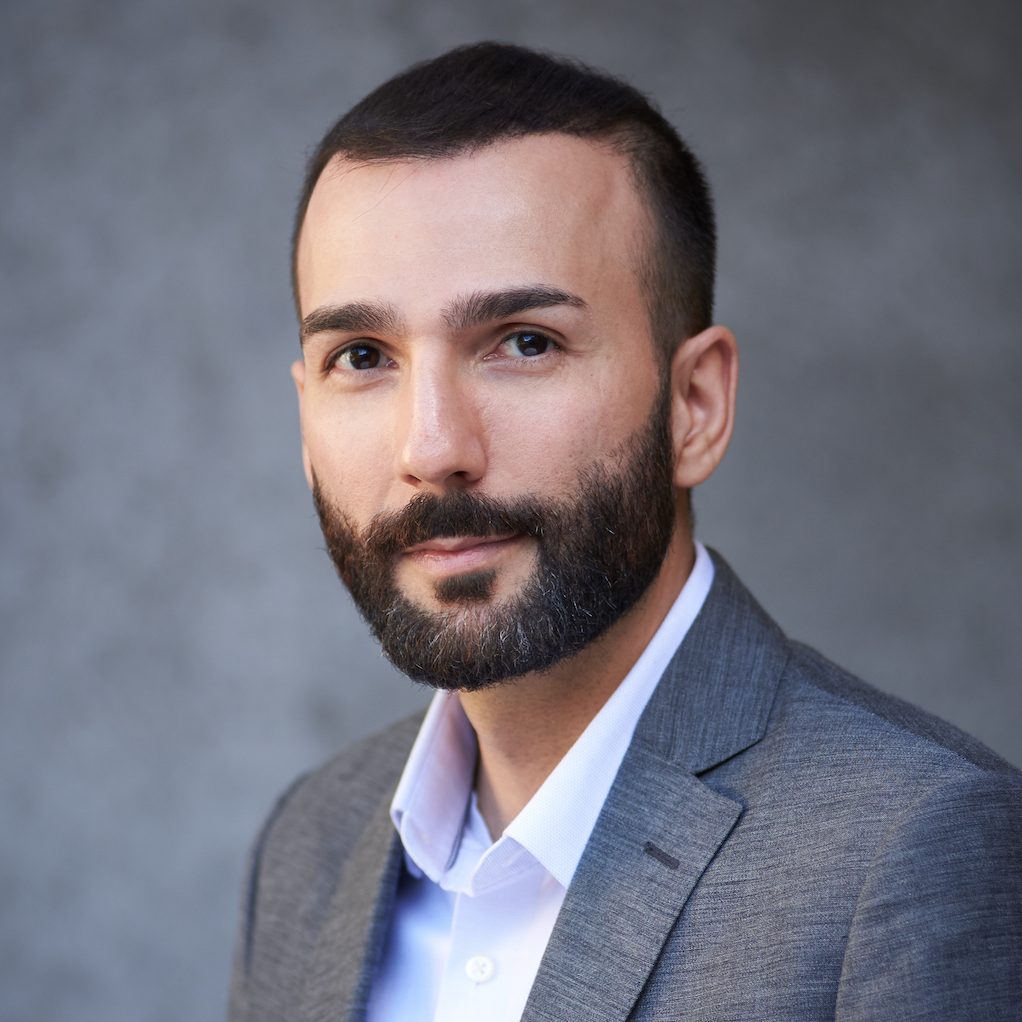
Dr. Nojang Khatami began the conversation by outlining the different meanings of exile. In its literal sense, exile is the forced banishment or displacement of an individual from their homeland. Figuratively, it can mean occupying marginal spaces within society under pressure from domination. Although both meanings carry a negative connotation, Dr. Khatami explained that exile can also open possibilities for transformation, resistance, and solidarity. Exilic thinking can therefore be more positive and productive, and it can become emancipatory. Through exilic thinking, we can avoid the more painful, angry, and negative paths that often arise from vengeful narcissism, which seeks to exclude and dominate through a narrow idea of personhood. Importantly, exilic thinking is not a new concept; we can find it across different times and places as a challenge to fascist logic. Dr. Khatami highlighted this through two figures: Ali Shariati and James Baldwin. Ali Shariati was a prominent revolutionary and sociologist during the Iranian revolution; he helped popularize Fanonian discourse of the marginalized masses fighting their oppressors. Dr. Khatami used Ali Shariati’s notion of the “return to self” to evoke social consciousness, relationality, and emancipation. Shariati’s thinking is a stark contrast to, and can be compared with, Khomeini, who framed exile through the lens of vengeful narcissism by institutionalizing theocracy and sacrificing the sovereignty of the people to sovereignty of the ruling class. James Baldwin offers a literary perspective through his work titled The Welcome Table and No Papers for Mahomet, an unpublished manuscript of Baldwin’s last novel. Through these works, Baldwin affirms the experience and lived realities of others, especially those dealing with exile, migration, and displacement. Ultimately, exilic thinking opens the possibility of transformation, solidarity, and emancipation.

Dr. Andrew Rasmussen began his presentation by explaining that displaced people are often discussed in terms of their distress; however, they can also be understood through their reception environment and what it facilitates or does not. The main focus was how current systems and laws handle individuals going through migration or asylum-seeking. Dr. Rasmussen used immigration court’s “cancel removal” proceedings to show the intersection and tension between psychology and law. Dr. Rasmussen explained his research project in which they asked immigration attorneys and judges about the psychological assessments they request, to understand how these assessments either support or do not support their clients’ cases. Through interviews, the research showcased the interaction between psychological science and law, particularly the ways that lawyers and judges think about psychological distress and diagnoses and immigrants’ stories. An interesting finding Dr. Rasmussen highlighted was that immigration court centers on the person’s responsibility to retell their experience of displacement and asylum-seeking. A key part of this process is consistency, yet not everyone can retell the same story to different people in exact detail, which psychologists want to emphasize. Dr. Rasmussen concluded the conversation by raising a central question: if we believe in preserving human dignity and view legal frameworks as preferable to non-legal approaches, how should we understand and analyze the tension between legal perspectives and psychologists’ scientific perspectives?
Together, the discussion allowed for openness and transcendence in how we typically think and speak of justice, migration, and global displacement.
For more ‘Event Recaps’ and to stay updated with the latest posts, please consider subscribing to the Ethics and Society Blog today! To learn more about upcoming and past events, be sure to visit the Center for Ethics Education events page!

