https://www.istockphoto.com/photo/usa-government-shutdown-gm1090950818-292652406
U.S. Deports Planeload of Iranians After Deal With Tehran, Officials Say
By Farnaz Fassihi and Hamed Aleaziz
“The Trump administration deported a planeload of about 100 Iranians back to Iran from the United States after a deal between the two governments, according to senior Iranian officials and a U.S. official with knowledge of the plans.”
The deportation flight departed from Louisiana on Monday night and was scheduled to arrive in Iran via Qatar on Tuesday. Iranian officials stated that the deportees included men and women, some couples, with some having volunteered to leave after months in detention while others had not. In nearly every case, asylum requests had been denied or the individuals had not yet appeared before a judge for an asylum hearing.
This deportation represents one of the starkest efforts yet by the Trump administration to deport migrants regardless of human rights conditions in receiving countries. Iran has one of the harshest human rights records in the world, persecuting women’s rights activists, political dissidents, journalists, lawyers, religious minorities, and LGBTQ+ community members. An Iranian official stated that U.S. immigration authorities plan to deport 400 Iranians over the coming months, with this first phase involving 120 individuals who entered the U.S. illegally, mostly through Mexico.
Trump Administration asks the Supreme Court to rule on its plan to end birthright citizenship
By Lawrence Hurley
“The Trump administration on Friday asked the Supreme Court to definitively rule on whether the president’s executive order purporting to end automatic birthright citizenship is constitutional.”
The two appeals, arising from cases in Washington state and New Hampshire, will likely determine once and for all whether the contentious proposal can move forward. The Trump administration’s position is that the 14th Amendment’s citizenship guarantee does not apply to either temporary visitors who legally entered the country or people who entered the country illegally.
Solicitor General D. John Sauer argued in court papers that the long-accepted interpretation of a broad right to citizenship that has held sway for more than a century is a “mistaken view” of the 14th Amendment that “became pervasive, with destructive consequences.” These are regular appeals that could take months for the court to resolve, most likely after agreeing to hear the cases and then hearing oral arguments. Sauer suggested the court decide the cases in its new term, which starts in October and ends in June of next year.
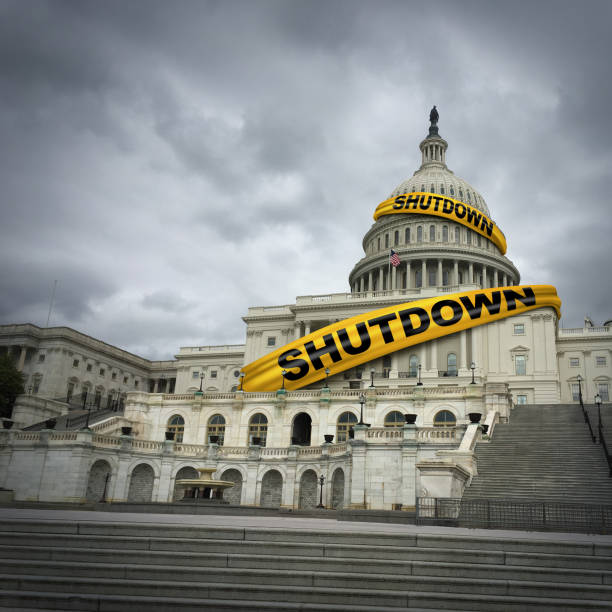
Here’s what a government shutdown could affect around the country
By Caitlyn Kim, The NPR Network
“Without congressional action, government funding will expire at 12:01 a.m. on Oct. 1, and anything deemed nonessential would be put on hold, affecting hundreds of thousands of federal workers who will go without pay.”
The impending government shutdown raises significant ethical concerns about the treatment of federal workers and essential personnel. Federal employees and active-duty military service members will not receive paychecks during a shutdown, with the first missed paycheck for federal employees coming on October 24 and October 15 for military personnel. Notably, the only salaries the federal government will continue to pay during a shutdown are members of Congress and the president, according to the Constitution, though elected officials can request their paychecks be deferred.
Essential workers—including air traffic controllers, TSA employees, federal law enforcement officers, and Veterans Affairs caregivers—will be required to continue working without pay to ensure public safety. The White House is also threatening mass layoffs of federal employees, in addition to furlough notices, if a shutdown occurs. The situation particularly affects vulnerable populations, as the WIC food program for mothers and young children could run out of funds rapidly, with a prolonged shutdown of more than one week putting WIC families at risk. SNAP benefits could also be depleted if the shutdown continues. FEMA’s Disaster Relief Fund is running dangerously low and needs congressional approval for additional funds, while the National Flood Insurance Program will lapse after September 30 unless there is congressional action.
Elon Musk Is Out to Rule Space. Can Anyone Stop Him?
By Noah Shachtman
“Elon Musk’s SpaceX completed its 95th launch of the year in July, more liftoffs than the rest of the world combined, cementing his dominance over both space launch capabilities and satellite internet through Starlink, which now has more than 8,000 satellites in orbit.”
Musk’s concentration of power in the space industry has created a situation where one individual wields extraordinary control over critical infrastructure and geopolitical dynamics. When Starlink went down for a couple of hours in late July, troops on both sides of the Russia-Ukraine conflict had trouble connecting with their drones and one another, demonstrating how central Musk has become to modern warfare. He has used this power strategically, reportedly cutting off Starlink over the Kherson region during a crucial Ukrainian counterattack and denying coverage near Russian ships in Crimea, while simultaneously providing service to support Israeli government objectives and reportedly enabling dissidents in Iran.
The situation intensifies as the Pentagon pursues space weaponization, with Trump’s “Golden Dome” missile defense system potentially requiring thousands of orbiting interceptors. SpaceX was reportedly part of a front-running team to build the system as a “subscription service” rather than government ownership, meaning Musk would control the kill switch to America’s orbiting weapons system. When the Trump-Musk alliance fractured and the president threatened to terminate Musk’s government contracts, the Defense Department found removing him functionally impossible because they had become so dependent on SpaceX and Starlink. This creates an unprecedented situation where a single private individual controls infrastructure vital to US national security, communication networks affecting millions globally, and potentially future space-based weapons systems, all while demonstrating a willingness to use these technologies to advance his personal political objectives.
Workers who build NYC’s subway cars face low pay, anti-union bosses, report alleges
By Ramsey Khalifeh and Stephen Nessen
“Workers who manufacture New York City’s new subway cars are paid less than the industry standard and face poor working conditions, contributing to rampant delays in the production of modern subway cars desperately needed by the MTA, according to a report published Tuesday by a labor advocacy group.”
A report by the nonprofit Jobs to Move America and Cornell University’s Climate Jobs Institute surveyed 180 current and former employees of Kawasaki, the Japan-based company that has received billions of dollars from the MTA over the last decade to build hundreds of train cars. The survey found that 79% of the company’s Nebraska employees and 68% of workers in Yonkers reported struggling financially, with workers making 16% less than the industry standard for their jobs. Many surveyed said they witnessed workplace injuries, unfair treatment and discrimination in their workplace.
Since 2018, the MTA has ordered 1,610 new subway cars from Kawasaki for $4.5 billion, despite near-constant delays in delivery. The transit agency in 2022 reported high rates of turnover at Kawasaki’s manufacturing plants, saying the attrition contributed to yearslong delays in the delivery of modern trains. The report ties Kawasaki’s alleged poor treatment of workers to problems with new trains’ gearboxes and signal systems that required some to be temporarily pulled from service in recent years. The sluggish production means riders are more likely to be stuck riding older, outdated subway cars that are far more likely to cause delays.
Kawasaki has for decades managed to keep unions out of its manufacturing plants, with its Nebraska operation located in a right-to-work state and its Yonkers employees remaining non-union despite being in a state known for strong labor protections. Jobs to Move America shared a Kawasaki employee handbook that discourages union drives, telling workers “You can talk to us, and we can talk to you; we hope to keep it that way.” Labor advocates are calling for the MTA to force Kawasaki to improve working conditions through a community benefits agreement.
Leading Travel Companies Vetted Their Partners for Ethics, Safety, and Sustainability
By Emese Maczko
“After troubling footage of animal mistreatment in popular destinations reignited debates about wildlife tourism, leading travel companies are taking an ethical stand — prioritizing integrity over profit.”
Jacada Travel, Intrepid Travel, and Go2Africa have each launched comprehensive audits to ensure that every experience they offer aligns with ethical principles of respect, safety, and sustainability. Under Natalie Lyall-Grant’s leadership, Jacada removed 40 animal encounters from its portfolio after identifying unethical practices. Go2Africa reviewed more than 600 partners, assessing their conservation and community efforts, while Intrepid Travel partnered with World Animal Protection to create an open-source Animal Welfare Policy aimed at transforming industry standards.
These companies agree that ethics must come before convenience. They refuse to promote experiences involving direct animal contact or entertainment based on captivity, even when such choices risk losing business. Instead of disengaging from noncompliant partners, they choose collaboration — working together to raise ethical benchmarks across the travel industry.
By embedding ethical reflection into every decision, these travel leaders argue that true sustainability is not just environmental but moral — a commitment to ensuring tourism uplifts, rather than exploits, the world it seeks to explore.
Chicago Woman Shot by Federal Agents Amid Disputed Circumstances
By Anna Betts
“After a 30-year-old woman was shot seven times by federal agents during immigration enforcement operations in Chicago, the incident has reignited urgent ethical debates about the use of force, community safety, and the human cost of aggressive deportation tactics.”
The Saturday morning shooting of Marimar Martinez in Chicago’s Brighton Park neighborhood represents more than a disputed legal case. It poses fundamental questions about the ethics of immigration enforcement in American communities. While federal prosecutors claim Martinez rammed a CBP vehicle, justifying an agent’s decision to fire five shots, her attorney argues body-camera footage reveals a more troubling narrative: an officer taunting Martinez before shooting within seconds of exiting his vehicle.
The ethical tensions are stark. Martinez, though armed with a licensed concealed weapon she never brandished, now has seven bullet holes in her body. Federal officials labeled protesters “domestic terrorists,” while community members see themselves as defending neighbors against what they view as militarized overreach. Texas National Guard troops have deployed to Illinois despite legal challenges, escalating the confrontation.
At the heart of the controversy lies a question of proportionality: When does immigration enforcement cross ethical boundaries? The incident forces a reckoning with competing values: national security versus community trust, law enforcement authority versus restraint, and the balance between controlling immigration and preserving human dignity.
As body-camera footage remains unreleased and Martinez awaits trial, the broader ethical question persists: What moral limits should govern how a democracy enforces its immigration laws?
Drones Reshape Military Ethics by Transforming How Pilots Think and Kill
By Emese Maczko
“Military drones are not passive tools but active agents that transform how operators think and kill, fundamentally altering the cognitive and ethical frameworks that govern warfare.”
Traditional Just War Theory assumes that soldiers are rational, autonomous moral agents. Drone warfare challenges this idea by reshaping how pilots perceive reality and make life-or-death decisions. The drone’s algorithmic systems, including pattern-of-life analysis, metadata processing, and infrared imaging, merge human and machine reasoning into a shared cognitive process.
This fusion distances pilots from the human reality of killing. Operators often describe targets as images rather than people, referring to casualties as “bug splats” and viewing themselves in a “God’s seat.” The infrared feed turns humans into ghostlike figures, erasing empathy and moral awareness that traditional combat would preserve.
Drones also redefine what counts as an enemy. Instead of visual identification, pilots rely on algorithmic patterns that dictate who is targeted. The machine’s logic shapes how operators think and decide, replacing human judgment with technological reasoning.
If technology alters how soldiers perceive and choose, traditional ethical frameworks may no longer apply. Moral responsibility shifts from the individual pilot to the entire human-machine system, where ethical meaning is not simply followed but created through technology itself.
The Ethics of Lithium as Brain Medicine: Treating Without Fully Understanding
By Bethany Brookshire
“After promising research revealed that trace amounts of lithium might prevent and reverse Alzheimer’s disease, scientists face a profound ethical question: Should we treat patients with a substance whose mechanisms we barely understand, especially when profit motives won’t drive the necessary research?”
Lithium has long been used to stabilize mood in bipolar disorder, yet its precise mechanisms remain unclear. Now, evidence suggests that at extremely low doses—about 1000 times lower than bipolar treatment—it might protect the brain from cognitive decline, a discovery that could redefine how medicine approaches prevention.
Research shows normal brains contain trace lithium, but levels are lower in Alzheimer’s patients. In mice, reducing brain lithium by 50 percent caused memory decline and protein buildup associated with the disease. Restoring low-dose lithium reversed these effects and restored memory.
The ethical tension lies in acting without full understanding. Some clinicians argue they won’t wait for complete knowledge if patients improve with treatment, while others urge caution. The dilemma deepens because lithium, being a natural element, offers little financial incentive for pharmaceutical companies, leaving potentially life-changing research underfunded.
This debate exposes a core flaw in modern medicine: a system that ties ethical progress to profit. If lithium can safely preserve memory and cognition, then the moral question is not just whether to use it, but whether we can justify waiting for certainty when lives may depend on action.
This toddler’s medical expenses can hit $3,000 a month. Her family says nearly every insurance claim is a battle.
By Erika Edwards, Maggie Vespa and Jessica Herzberg
“When a 2-year-old with a rare, life-threatening genetic condition needs a vest to prevent pneumonia, her insurance company denies it three times—claiming she doesn’t get lung infections often enough. This is the harsh reality for families fighting two battles: one for their child’s survival and another against an insurer’s bottom line.”
Two-year-old Emmalyn has Aicardi syndrome, an extremely rare genetic condition causing severe seizures, vision problems, and developmental delays so profound she cannot walk, sit independently, or hold up her head. The disease affects only a few thousand people worldwide, almost exclusively girls, and carries a grim prognosis: 25% of children die by age 6, rising to 60% between ages 6 and 14.
The family’s struggle centers on United Healthcare’s pattern of denials. The insurer rejected coverage for a vibrating chest vest that prevents deadly pneumonia, reasoning that the child didn’t have frequent lung infections—the very condition the preventive device is designed to avoid. They also denied a safety bath chair, suggesting the family could simply “wipe her down,” despite the drowning risk. When she outgrew the $1,800 chair, the family paid through employer donations rather than endure another exhausting approval process.
Her doctor says medical staff spends up to a full day per case fighting for standard-of-care equipment. Monthly costs reach $3,000 for medications, special formula, and equipment—expenses that should be covered but instead require relentless advocacy.
This case reveals a fundamental ethical failure in American healthcare: a system where insurance companies deny medically necessary care to vulnerable children, forcing families into bureaucratic warfare while their child’s life hangs in the balance. The moral question isn’t whether these denials save money—it’s whether we can justify a system that prioritizes profit over a toddler’s ability to breathe safely and bathe without drowning.
For more ‘Ethics in the News’ and to keep updated with the latest posts, please consider subscribing to the The Ethics and Society Blog today!

