National Parks Ordered to Remove Signs on Climate Change and Native American History
By Jake Spring
“Since their founding more than a hundred years ago, national parks have never faced a more dire and existential threat than climate change.”
Trump administration officials have ordered national parks to remove dozens of signs and displays about climate change, environmental protection, and the historical mistreatment of Native Americans, affecting at least 17-18 parks including the Grand Canyon, Glacier, Big Bend, and Zion. This action implements President Trump’s executive order on “restoring truth and sanity to American history.”
At the Grand Canyon, staff flagged exhibit passages describing how settlers exploited land and federal officials pushed tribes off their land to create the park. Proposed edits would remove references to federal policies restricting Native American cultural practices and mentions of ancestral suffering. Climate-related displays addressing pollution, wildfire risks, and air quality monitoring were also targeted for removal. Sites in Colorado, Arizona, and Wyoming received orders to change or remove panels describing Native leaders, forced tribal removal, and historic massacres of Indigenous peoples.
Last week, the National Park Service removed an exhibit about George Washington’s slave ownership at Independence National Historical Park in Philadelphia. Critics argue this effort represents an attempt to revise American history by removing acknowledgment of difficult historical truths and scientific information from public spaces.
The Supreme Court keeps overturning precedent. It swears that it’s not
By John Fritze
“The distinction between formally and practically overturning precedents is important.”
The Supreme Court has developed a troubling pattern of dismantling decades-old legal precedents without formally acknowledging it is doing so and this raises a fundamental ethical question about honesty and accountability in the highest court in the land and in its recent 6-3 ruling gutting a key provision of the Voting Rights Act of 1965 the conservative majority effectively rewrote protections for minority voters while publicly insisting it had not overturned prior decisions and ethically this is a form of institutional deception because when those entrusted with interpreting justice obscure what they are actually doing they violate the very principle that justice must not only be done but be seen to be done.
The deeper moral failure lies in who bears the consequences because the Voting Rights Act was written in blood forged from the sacrifices of a civil rights movement that fought against a system designed to silence minority voices and to quietly hollow it out while denying responsibility is not judicial restraint it is ethical cowardice and data shows that departures from precedent occur in nearly 28% of relevant cases even as explicit overrulings remain rare meaning the court has mastered the art of change without accountability and when the court rewrites the rules in language only lawyers can decode it does not just weaken legal protections it weakens the moral contract between government and the governed.
‘Shock and share’: Iran makes social media a key front in war against America
By Laura Kelly
“Sassy comebacks, sarcastic insults and glossy AI-generated videos have all been key tools in Iran’s retaliation against the United States, as social media has become a key front in the more than two-month war.”
As tensions between Iran and the United States escalate, Iran has opened a new front in their conflict fought not with weapons but with words, images and algorithms. By turning to social media as a tool of information warfare, the Iranian government raises urgent ethical questions about propaganda, manipulation and the weaponization of free and open platforms. Official embassy accounts are being used to push politically charged content to global audiences and by embedding their messaging within American cultural references including videos featuring Donald Trump, Iran is exploiting the very openness of Western digital spaces to spread its narrative.
The ethical concern deepens when we examine how the content spreads. Shock and outrage are powerful engines of virality and when viewers encounter jarring content and share it in disbelief they become unknowing participants in a foreign government’s influence campaign. This reflects a growing investment by the Iranian republic in communications and technology recognizing that the battle for hearts and minds is just as consequential as any military engagement. When open platforms become instruments of statecraft and manipulation the line between communication and coercion is one the world can no longer afford to ignore.
Minneapolis Shooting Scrambles Second Amendment Politics for Trump
By Bill Barrow and Nicholas Riccardi,
“The president supports the Second Amendment rights of law-abiding American citizens, absolutely.”
The fatal shooting of Alex Pretti by a federal agent in Minneapolis has created friction between the Trump administration and gun rights advocates. The 37-year-old ICU nurse, who had a valid permit to carry a concealed weapon, was killed by a U.S. Customs and Border Protection agent on January 24 during immigration enforcement operations. Bystander videos showed Pretti holding a cellphone and helping a pepper-sprayed woman before being tackled by multiple officers, with no footage showing him drawing his weapon.
Top administration officials initially called Pretti a “domestic terrorist” and suggested his lawful possession of a firearm justified the shooting. The National Rifle Association and Gun Owners of America sharply criticized this characterization as “dangerous and wrong,” while several prominent Republicans pushed back, arguing it contradicts Second Amendment principles. The White House later attempted to recalibrate its messaging, with Trump dispatching border czar Tom Homan to Minnesota to manage the situation.
The controversy has raised concerns among Republicans heading into midterm elections as public sentiment grows increasingly skeptical of aggressive immigration enforcement tactics. This marks the second fatal shooting by federal agents in Minneapolis this month during the administration’s deportation crackdown.
Meta, TikTok and YouTube Heading to Trial Over Youth Addiction and Mental Health Claims
By Clare Duffy
“For parents whose children have been exploited, groomed, or died because of big tech platforms, the next six weeks are the first step toward accountability after years of being ignored by these companies.“
For the first time, social media giants will defend against claims that their platforms harm young people’s mental health before a jury. A 19-year-old identified as KGM and her mother are suing TikTok, Meta, and YouTube, alleging the companies knowingly created addictive features that harmed her mental health and led to self-harm and suicidal thoughts. The trial begins Tuesday in Los Angeles and could influence how over 1,000 similar cases are resolved.
KGM’s lawsuit alleges she started using social media at age 10 and that the addictive design of Instagram, TikTok and Snapchat led to compulsive use that corresponded with declining mental health. The suit claims the platforms targeted her with harmful content related to depression and body image, and that she was bullied and threatened with explicit photos on Instagram. Top executives from Meta, TikTok, and YouTube are expected to testify during the weeks-long trial.
The tech companies have rejected claims that social media harms youth mental health, pointing to inconclusive research and arguing their platforms provide benefits. They have rolled out various safety features and parental controls in recent years, but many parents and advocates say the platforms have failed to protect young users. The outcome could put tech companies on the hook for billions of dollars in damages and force platform changes.
Trump’s Use of AI Images Pushes New Boundaries, Further Eroding Public Trust, Experts Say
By Kaitlyn Huamani
“The creation and dissemination of altered images, especially when they are shared by credible sources, crystallizes an idea of what’s happening, instead of showing what is actually happening.”
The Trump administration’s use of AI-generated imagery on official White House channels is raising concerns about blurring reality and fabrication. The official White House account posted an altered image of civil rights attorney Nekima Levy Armstrong crying after her arrest, following Homeland Security Secretary Kristi Noem posting the original unedited photo.
AI-generated videos related to Immigration and Customs Enforcement have proliferated on social media following the fatal shootings of Renee Good and Alex Pretti by Border Patrol officers in Minneapolis. Fabricated videos show women driving away from ICE officers and people confronting agents, with many accounts capitalizing on engagement using popular keywords. Misinformation experts warn that AI-generated or edited images shared by credible sources erode public trust, as they present distorted versions of events rather than accurate depictions of reality.
NASA is about to send people to the moon — in a spacecraft not everyone thinks is safe to fly
By Jackie Wattles
”NASA is about to send people to the moon — in a spacecraft not everyone thinks is safe to fly.”
NASA plans to launch four astronauts on the Artemis II mission as soon as February 6 despite a known flaw in the Orion spacecraft’s heat shield. The issue was discovered after the 2022 Artemis I test flight, when chunks of the heat shield unexpectedly broke off during reentry, leaving divots in the material designed to protect the spacecraft from temperatures exceeding 5,000 degrees Fahrenheit.
NASA determined the heat shield lacked sufficient permeability, causing gases to build up and fracture the surface. Rather than replacing it, NASA decided to modify the spacecraft’s reentry trajectory to reduce exposure to peak heating. Some former NASA employees, including heat shield expert and former astronaut Dr. Charlie Camarda, argues the mission should not proceed with crew, warning that engineers cannot accurately predict how the heat shield will behave.
NASA leadership and investigation team members maintain the modified flight path will keep astronauts safe, though they acknowledge the heat shield will likely crack. The debate reflects broader concerns about NASA’s risk assessment culture, with critics drawing parallels to past tragedies like the Space Shuttle Columbia disaster.
ICE Agents’ Role at Milan Olympics Sparks Outrage in Italy
By The New York Times
“This is a militia that kills, a militia that enters into the homes of people, signing their own permission slips. It is clear they are not welcome in Milan, without a doubt.”
U.S. Immigration and Customs Enforcement agents will provide security support during the Milan Cortina Winter Olympics, sparking criticism from Italian officials. According to U.S. Embassy sources, ICE’s Homeland Security Investigations division will support diplomatic security but will not conduct immigration enforcement operations, similar to their role at previous Olympic Games including Paris 2024.
Milan Mayor Giuseppe Sala condemned ICE’s presence, calling the agency unwelcome in his city, which hosts most ice sports during the February 6-22 Games. The criticism follows two fatal shootings by ICE agents in Minneapolis this month during immigration enforcement, which sparked mass demonstrations. Italian state television aired footage of ICE agents threatening a RAI crew while reporting in Minneapolis. The hard-left USB trade union plans to hold a rally protesting ICE on February 6, coinciding with the opening ceremony.
American Academy of Pediatrics Breaks from CDC with Childhood Vaccine Revisions
By Sarah Fortinsky
“At a time when parents, pediatricians and the public are looking for clear guidance and accurate information, this ill-considered decision will sow further chaos and confusion and erode confidence in immunizations.”
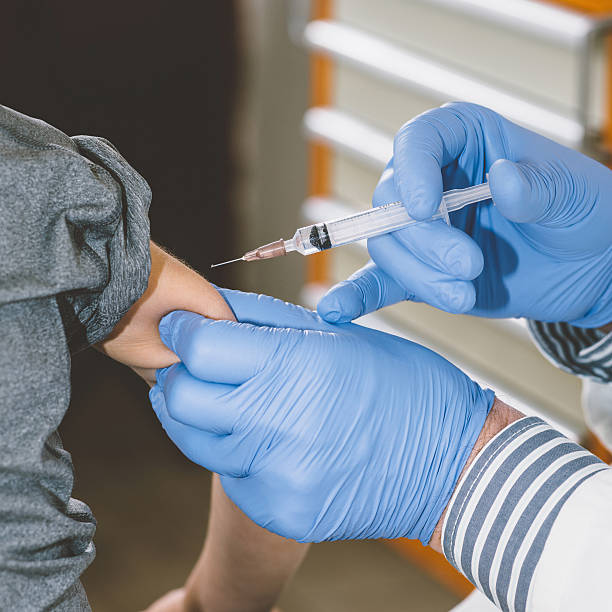
The American Academy of Pediatrics published its own childhood immunization schedule that diverges from recent federal vaccine guidance, creating an ethical dilemma for parents and physicians navigating conflicting recommendations. The AAP schedule recommends children be vaccinated against hepatitis A and B, meningococcal disease, rotavirus, influenza, and RSV—diseases the Centers for Disease Control and Prevention recently dropped from its universal immunization recommendations.
The dispute raises fundamental questions about scientific authority, institutional trust, and professional autonomy in public health. The AAP explicitly rejected the CDC’s current schedule, arguing the federal changes bypassed the standard scientific review process. The organization has clashed with the Department of Health and Human Services under Secretary Robert F. Kennedy Jr., who made the changes after a brief review of other countries’ practices rather than following established expert consultation procedures. The conflict presents ethical challenges for pediatricians choosing between federal guidelines and professional recommendations, and for parents making informed decisions amid contradictory official guidance.
South Carolina Measles Outbreak Becomes Largest in US Since Disease Was Declared Eliminated
By Meg Tirrell, Deidre McPhillips, and Jamie Gumbrech
“Vaccination remains the most effective way to prevent measles.”
South Carolina’s measles outbreak has become the largest in the United States since measles was declared eliminated, raising fundamental ethical questions about individual liberty versus collective responsibility in public health. The vast majority of cases are among unvaccinated children, and the outbreak has spread to other states, putting the US at risk of losing its measles elimination status when international health officials meet in April.
Under Health and Human Services Secretary Robert F. Kennedy Jr., a longtime vaccine skeptic, the federal government’s approach has shifted dramatically. CDC Principal Deputy Director Dr. Ralph Abraham stated that losing elimination status would not be significant, framing ongoing transmission as the cost of respecting communities that choose not to vaccinate as their personal freedom. This position represents a stark departure from traditional public health ethics, which balances individual autonomy with protecting vulnerable populations who cannot be vaccinated.
The outbreak is centered in areas with low vaccination rates, well below levels needed to prevent disease spread through community immunity. State health officials continue encouraging vaccination to contain the outbreak, highlighting the ethical tension between federal rhetoric promoting vaccine hesitancy and local efforts to protect public health.
For more ‘Ethics in the News’ and to keep updated with the latest posts, please consider subscribing to the The Ethics and Society Blog today!

